
Consultation
The first appointment will always be a periodontal consultation. This will involve a comprehensive discussion to ensure we are aware of your personal concerns and aims of treatment. This will be followed by a detailed periodontal examination which involves measuring the position of the gums and determining whether or not spaces (pockets) have opened up between the gums and the teeth.
It is important that before any treatment is suggested, the severity and extent of the disease is established. X-rays and photographs may also be taken on this appointment. Once all the information has been obtained James will discuss the findings in detail and suggest any treatment that may be required. He will also cover any questions you may have including costs and timings.
Tailored oral hygiene advice
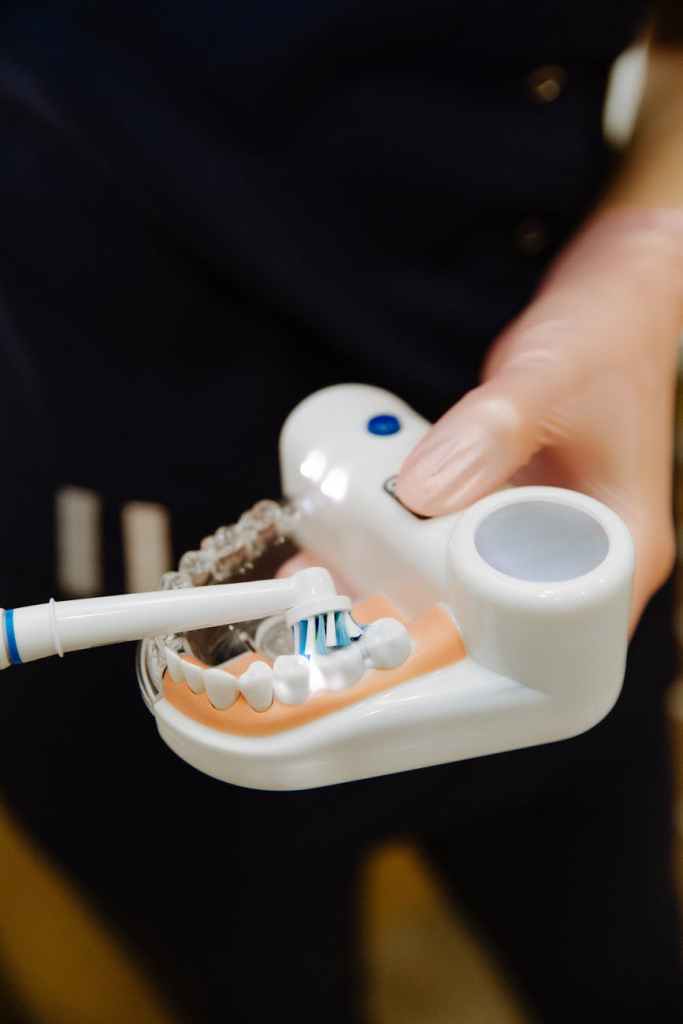
In the first appointment and subsequent visits James and his team will work with you to ensure you feel confident that you are effectively cleaning your teeth. This may involve a temporary dye painted on the teeth to show you areas you are missing. We will advise you of toothbrushing and interdental cleaning aids that are most suited to your needs. This is one of the most important aspects of your treatment. This is particularly the case if you are more susceptible to gum disease.
Non-surgical periodontal therapy
If you have been diagnosed with periodontitis, then treatment will usually begin with non-surgical periodontal therapy which you may know as “deep cleaning”. This involves removal of the bacteria and hardened calculus around and below the gum line. It is technically referred to as scaling and root surface debridement. It is important that the pockets and root surfaces are cleaned effectively. Therefore this usually requires local anaesthetic to ensure you are comfortable throughout the process. The aims of this treatment are to reduce the depth of the pockets and increase the ability to maintain good oral hygiene in the area.
Occasionally, this treatment may be recommended alongside antibiotic tablets. This is usually if you have a particularly aggressive disease or one that has not responded with previous treatment.
The outcome of this treatment will be assessed 10-12 weeks later. This is an important stage to revaluate the need for any further treatment. In many cases the non-surgical treatment will be suggested to be repeated as persistent disease may respond to a second round.
Periodontal surgery
If the pockets are not stable following deep cleaning, surgery may be suggested. This involves a delicate procedure to lift the gum back. The root surfaces are then cleaned with direct vision and replaced back with stitches. In many cases, bone regenerative materials may be placed around the teeth. Where regeneration is possible Dr Chesterman will usually suggest the use of Straumann Emdogain (porcine derived protein gel) and Geistlich Bio-Oss (Bovine derived bone substitute) to get the best results. After a 2 week period of healing your stitches will be removed. Specific instructions following this procedure will be given including how to keep the area clean during the healing stages.
Supportive periodontal care
When active treatment is complete, supportive therapy maintains the health improvements achieved. This appointment will involve measuring the gums to ensure any relapse is picked up early, removing any bacterial deposits and re-treating any developing pockets. The recall interval for this is usually every 3 months but this will be specific to your needs and risks of gum disease. This can be provided by a hygienist under Dr Chesterman’s supervision or a supportive care plan can be sent back to your referring general dentist to carry out this phase.
Gum recession
If your teeth start to appear longer than they used to, your gums may have started to recede. With recession you may notice sensitivity and discomfort when brushing. Recession may also be of an aesthetic concern depending on which teeth are affected.
Gums may start to recede for different reasons, including poor oral hygiene and the development of gum disease. A combination of a thin gum type and/or over zealous brushing could also be the culprit. Trauma from piercings can also cause gum recession.
There is a variety of ways to manage recession and correction back to the original position is not always possible. The first stage of treatment involves optimising your brushing around the receded teeth. Desensitising toothpastes may also be suggested. On many occasions this is all that is needed, however, some cases will benefit from a gum graft procedure.
Gum grafting
There are two main types of gum grafts. The first type is known as a free gingival graft and aims to thicken the receded gum with a graft from your palate. This graft is stitched in place and left to heal for 2 weeks. This graft has limitations such as limited coverage of the recession defect. Free gingival grafts also have a colour mismatch as the skin on the palate has lighter colour. However, this procedure is quicker to perform and is an excellent way to get a thicker gum type around the receded gums. This can make brushing much more comfortable and prevent further recession.
Alternatively, a gum graft procedure to partially or completely cover the area of recession can be done. There are many techniques that are suggested for this type of graft. Dr Chesterman opts to use a tunneling procedure which is associated with excellent results. A small graft from the palate called a connective tissue graft is used to thicken and cover the gum in the area of recession. The graft is secured in place and the gum is lifted to cover the graft and recession. There is no colour discrepancy and is much more effective at covering the recession around teeth.
An appointment with a periodontal specialist will be able to advise whether you would benefit from gum graft surgery.
 Dr James Chesterman