
Root canal treatment (endodontic treatment) aims to eliminate bacteria from the infected root canal, prevent reinfection and ultimately save the tooth. In short, root canal treatment involves removal of the infected pulp (nerve), cleaning the canal space and filling the root canal.
Structure of a tooth
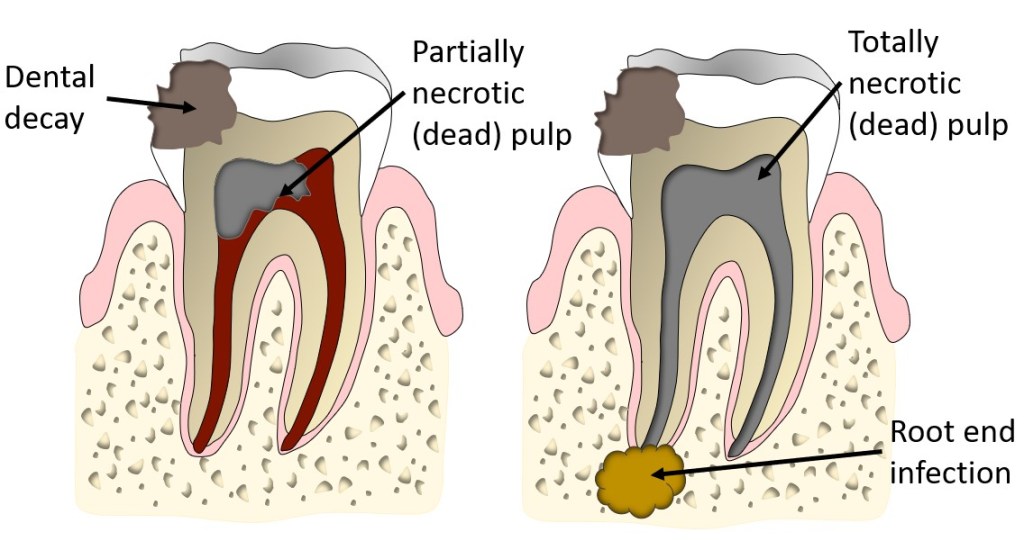
A tooth is made up of 2 parts. The crown is the top part which is visible in the mouth. The root extends below the gum line into the jaw-bone securing the tooth in place. The tooth is also made up of several layers. The outer hard surface seen in the mouth is enamel which protects the tooth. Underneath this is dentine which is softer and makes up most of the tooth and root structure. In the centre of the tooth is the dental pulp which contains the nerve. This area can become infected or necrotic after dental decay or trauma to the tooth. It is this space that requires disinfecting during root canal treatment

Signs and symptoms of root canal infection
In many cases you may not experience any pain despite there being an infection present in and around your tooth. However, you may notice one of the following problems:
- Lingering pain after hot or cold foods/drinks
- A sore gum next to the tooth
- Pain with biting and chewing
- A loose tooth
- A swelling of the gum or face
- An abscess (collection of pus) around the tooth
- A discoloured tooth
- A draining sinus (spot) on the gum representing a long term infection
Root canal procedure
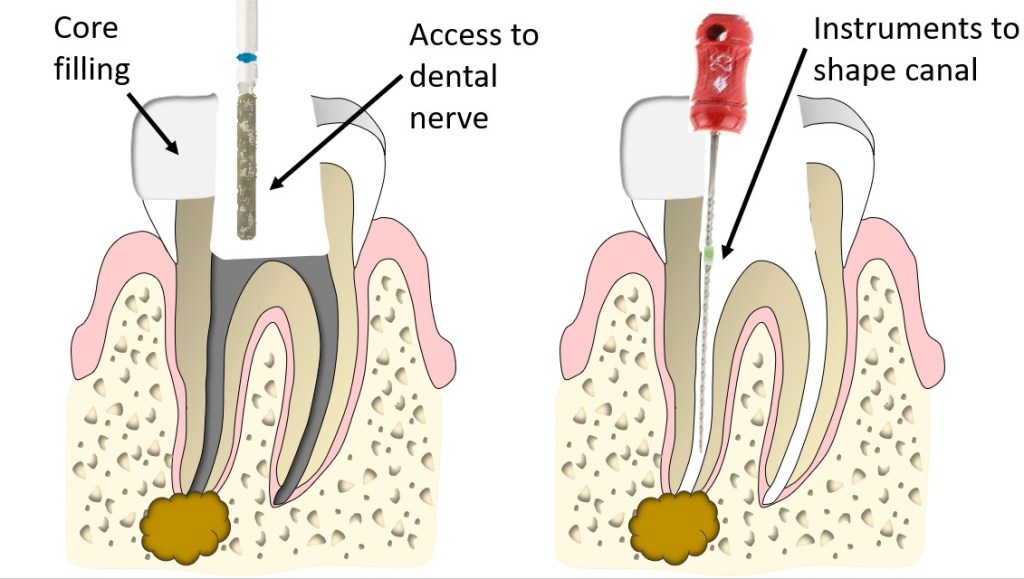
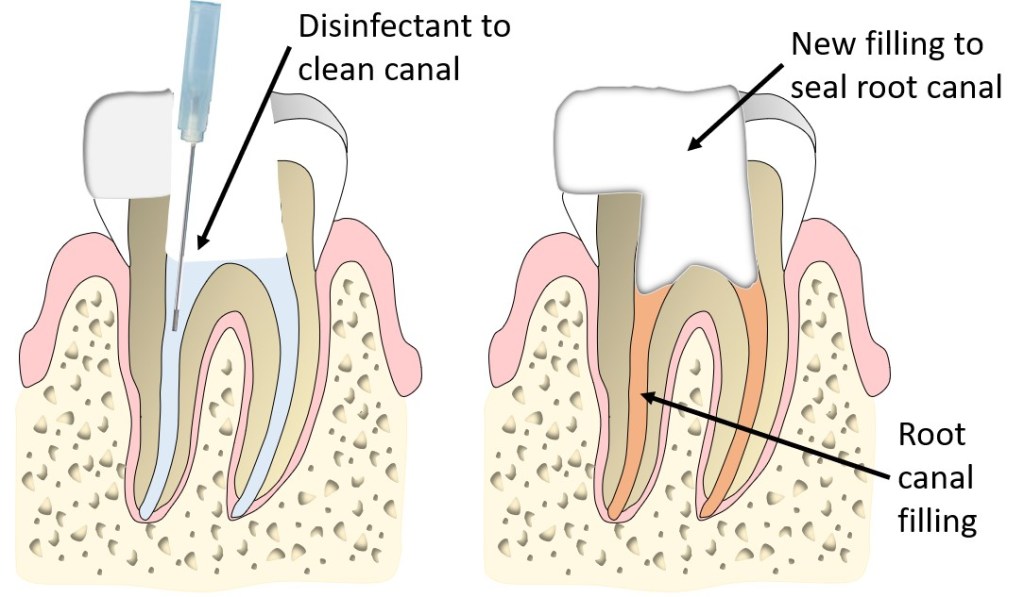
Prior to root canal treatment a thorough assessment including a dental xray will be required to diagnose the problem. If a tooth requires root canal treatment the tooth will be numbed with local anaesthetic. A rubber dam sheet is placed over the tooth to allow thorough and safe disinfection. A small hole is made in the tooth to access the root canal. A variety of instruments are used to shape and remove infected tissue from the tooth. The canal space is disinfected prior to filling and sealing to ensure the space is not reinfected.
Complications of root canal treatment
Root canal treatment is technically demanding. During root canal treatment there are risks including separating an instrument within the canal, failure to negotiate to the full length of the canal or perforating the side of the root. These risks are generally uncommon and prevented with modern techniques and magnification. If this occurred during your treatment, it may reduce the chances of success and we would discuss this with you at your visit.
Immediately after the root canal treatment there may be some slight tenderness, but usually over-the-counter pain killers alleviate the discomfort. If the tooth had a large infection there is a small risk of a flare up in response to the treatment, which in rare cases requires antibiotics in conjunction with completing the root canal treatment.
Success rates of root canal treatment
Overall, root canal treatment has been shown to be successful in around 90% of cases (9 out of 10) for up to 10 years. If there is large existing infection or the tooth has already had root canal treatment the success rate will be lower at around 80% or less.
Surgical root canal treatment
Occasionally it is not possible or favourable to perform root canal by drilling through the crown of the tooth. For example, if there is a large post in the tooth already it may be too difficult to remove the post without damaging the tooth. Therefore, in such select cases, surgical root canal treatment may be recommended.
This involves administering local anaesthetic to make sure the area is very numb. A small area of gum is lifted to reveal the root. The end of the root is removed which is where the infection is located. A small root filling is carried out at the end of the root to seal the root canal and prevent infection. The gum is repositioned back and secured with stitches. These will need to be removed 1-2 weeks later along with an xray to assess the outcome.
Surgical root canal treatment has a similar success rate to non-surgical root canal treatment. The additional risks of surgical root canal treatment include bleeding, infection, bruising and swelling. There is also the risk of recession of the gum around the tooth treated and the adjacent teeth. However, these risks are usually very minimal as the surgery is carried out with a delicate approach. Occasionally, surgery may reveal a crack or fracture of the tooth which cannot be seen on the pre-operative xray. This may mean the tooth cannot be saved and eventually would need removal.
 Dr James Chesterman