
A dental implant is a long-term solution for replacing missing teeth. Dental implants are directly placed into your jawbone with minor surgery. A dental implant essentially provides an artificial replacement for the root of your missing tooth. A dental implant can support single crowns, fixed bridges, or removable dentures.
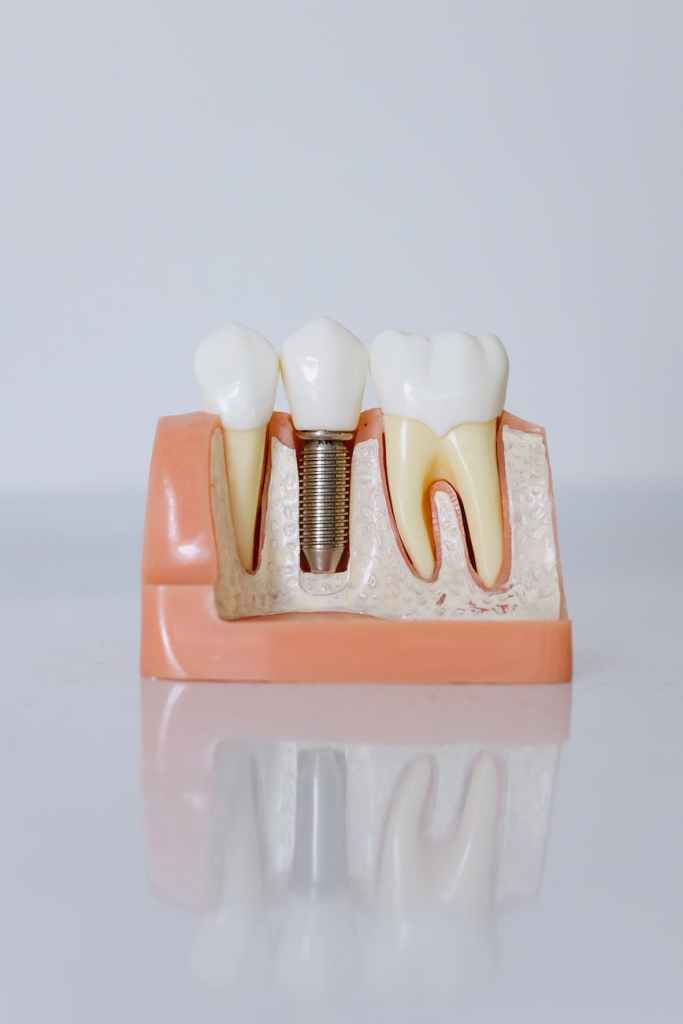
Dental implants are made from titanium which are placed directly into the jawbone. After a period of healing, the bone surrounding the implant will gradually fuse to the surface securing the implant in place. When the implant is secure it can be used to support replacement teeth.
Fixed implant crowns/bridges
Crowns replace single teeth and bridges replace several teeth. These can be screw retained directly to the dental implant or cemented (glued) on top of a post which is screwed directly to the dental implant. It is generally preferred to have screw retained options as these allow easier repair or replacement. However, the amount of bone may make screw retained options more challenging. Cement retained solutions may sometimes be preferred as they are more flexible with implant positioning. It is important that you are able to clean around the bridges/crowns as you cannot remove them for cleaning.
Implant supported dentures
An implant supported overdenture is a removable solution to replace several teeth. It is held in place with “press-stud” like attachments. An advantage of an overdenture is that it can replace several teeth with fewer implants than a fixed bridge. Therefore, the surgery may be more straight forward and require less complex treatment such as bone grafting. They can also replace any lost gum height more easily than a fixed bridge. The denture should be removed at night. It is important to clean around the dental implants like they were your natural teeth. There will be some minimal movement of the denture during chewing as it is also supported by your gums in the same way a regular denture is.
Stages of dental implant treatment
Initial consultation
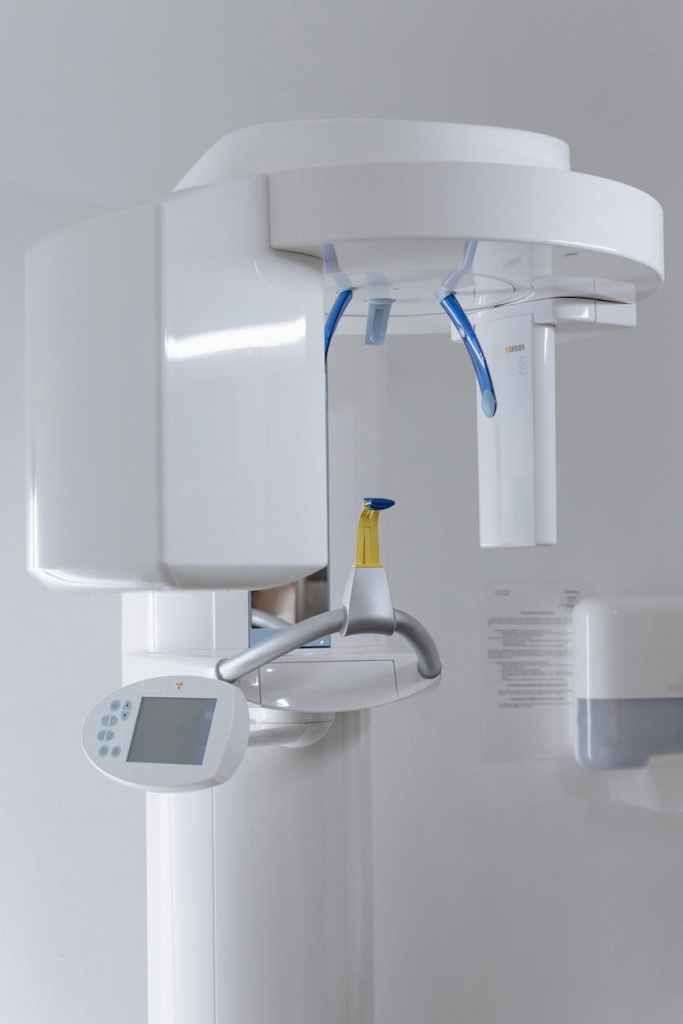
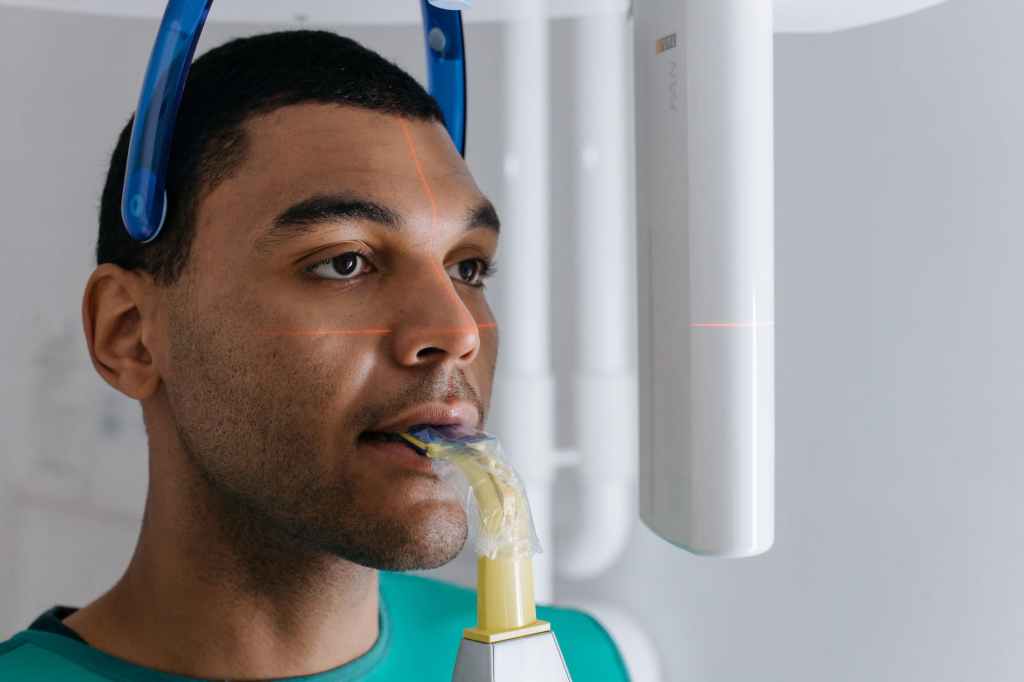
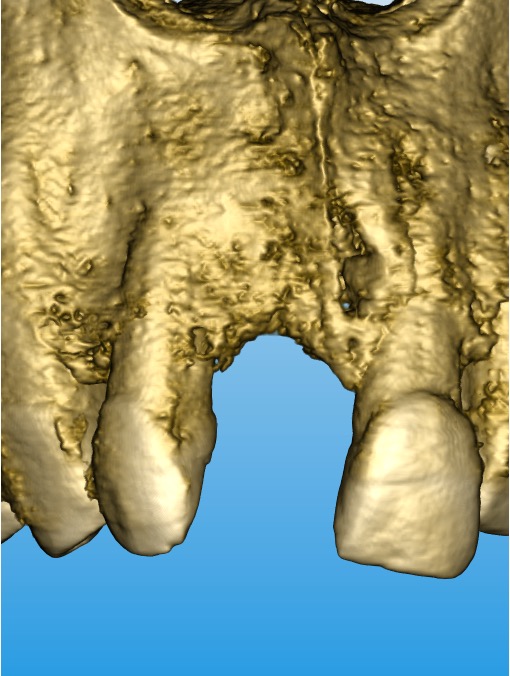
At your consultation, a full examination assessing the health of your whole mouth will be undertaken. X-rays will usually be taken on the day and you may also require some moulds of your teeth to allow a mock-up of the replacement teeth to be made. If implants are appropriate, you will then usually require a 3D x-ray to assess the bone width and height. In some cases, a bone graft prior to implant surgery is required, however, usually the bone can be built up at the same time as placing the dental implant. You will also have the opportunity to ask any questions relating to your treatment.

Your treatment plan
Once all the relevant information is collected, an individual treatment plan can be discussed with you. This involves explaining what will happen before, during, and after the procedure. A quote for the cost of your treatment will be provided. Think about any questions you want to ask and bring them along to your appointment. It takes between three and twelve months to complete the whole treatment process depending on the complexity of your case and whether any preparation work is needed.
You may require additional treatment prior to dental implants such as tooth removal. If this is the case, a period of several weeks healing is required prior to implant insertion. In the meantime, if this gap is visible a temporary denture or bridge may be required to replace the tooth.
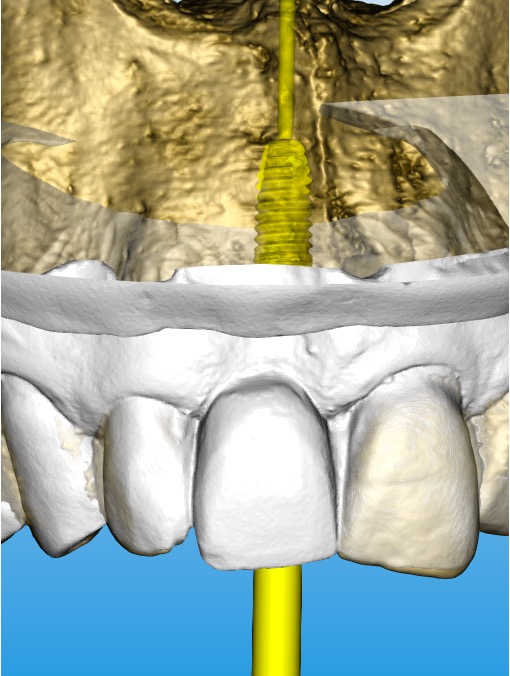
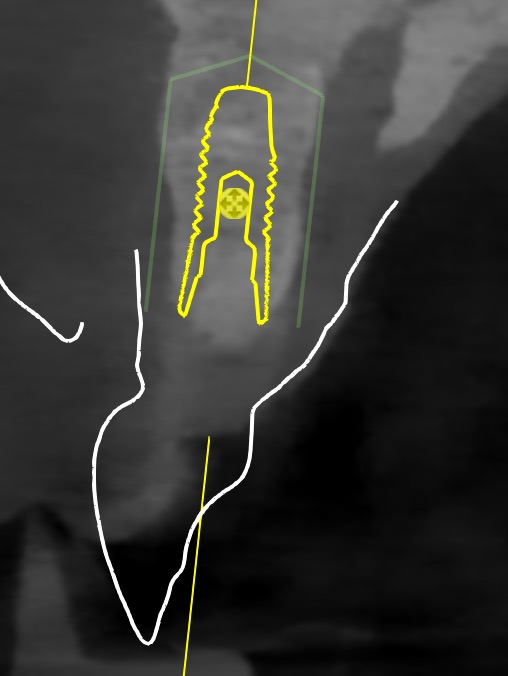
Implant treatment
Dental implants are inserted under local anaesthetic in a 60-90 minute appointment. Your mouth will be completely numb so you will not feel any pain, but you will remain awake. You may have some initial swelling or discomfort around the implant area after the procedure. Taking an over-the-counter painkiller such as paracetamol or ibuprofen will help with this. If you wear a denture this will be adjusted to allow healing of the area. Post-operative instructions will be given on how to best look after your implant in the healing phase.
After 1-2 weeks, you will need the stitches removing from the area of surgery.
The implants are left to fuse to the bone for several weeks. In some cases, a second minor procedure is needed to uncover the implants after this period of healing. Once the implants have fully healed they can be used to support the planned crown, bridge or denture:
- If you are having a crown or fixed bridge made, dental impressions are undertaken. A dental technician will then construct your bridge or crown within 2-3 weeks. This will be tried in to assess the fit and appearance prior to securing in place. Occasionally, a temporary crown or bridge is required for several months to get the ideal appearance.
- If you are having an implant supported denture, press stud-like attachments are fitted to the implants. We can usually incorporate the attachments that clip onto these into your existing dentures as a temporary solution. A new set of dentures can then be made which fit onto these press studs and are made in the same way as standard dentures.
Once your restoration is fitted, we will show you how to clean around the dental implants. This is important to prevent gum problems around the implants. Regular check ups are also required to monitor the dental implants with follow up x-rays and clinical monitoring.
 Dr James Chesterman